Simulation Details
In this section, we will discuss the different cell types and their roles in the simulation.
Briefly, there are 6 kinds of cells:
- Sprout
- Leaf
- Root
- Branch
- Antenna
- Seed
We will cover each cell in its own section.
Also, we have several environmental energy resources:
- Sunlight
- Organic matter
- Electrical charge
The Genome
The following shows the structure of one of the 52 genes composing of a genome.

Genome Actions
The genome controls how sprout and seed cells behave.

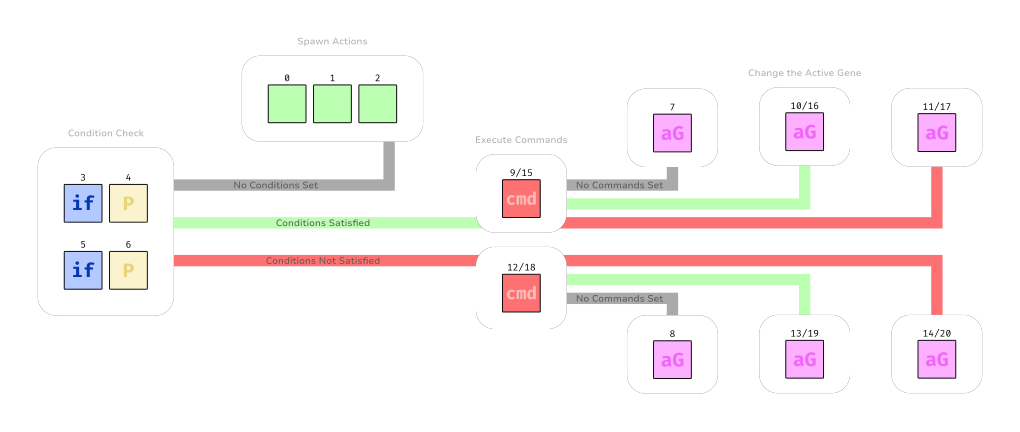
- The spawn action block indicates what cells should be spawned in the left, forward, and rightwards positions. This block is executed only if no conditions blocks are present.
- Condition blocks are used to direct the flow of behaviour. If both of the given predicates are true, then a command block is executed (there are separate blocks for sprouts and seeds). Similarly, if either yield false, there is a command block that executes in that case.
- Commands perform an action (hence there are separate blocks for sprouts and lone/disconnected sprouts). Depending on whether the command is not present, whether it cannot be completed, or if it completed successfully, a next active gene is set.
- The active gene is simply the index of a gene in the full genome.
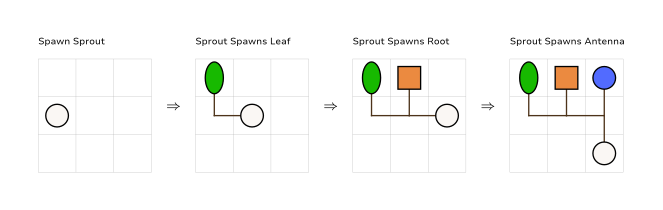
Together, these features control the expressiveness of the system. Below is a demonstration of a sprout cell spawning new sprouts in its facing direction/to its right, and spawning leaf, root, and antenna cells to its left.